
- 5+ years of home healthcare experience
- Background-verified clinical staff
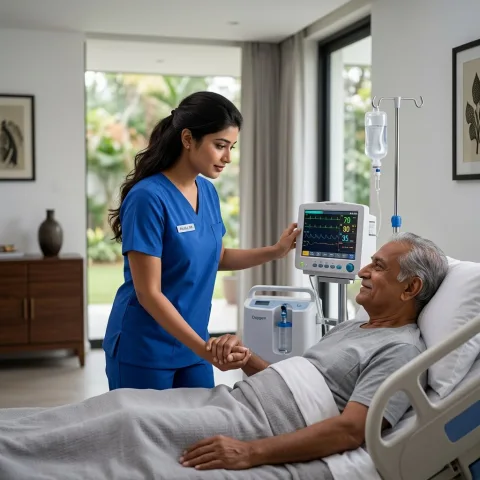
Medca Healthcare provides Ryles tube care at home in Bangalore including nasogastric insertion, placement verification, enteral feeding administration, tube flushing, nare care, and displacement monitoring — by registered nurses following enteral feeding safety protocols. Confirm your Bangalore pincode during enquiry.
Near You
Ryles Tube Care in Bannerghatta Road
Professional ryles tube care available in Bannerghatta Road (560076).
-
 Sub-service
Ryles Tube Feeding Support
Ryles Tube Feeding Support at home in Bangalore by a Medca nurse, as part of Ryles Tube Care.
View sub-service → -
Sub-service
Ryles Tube Maintenance
Ryles Tube Maintenance at home in Bangalore by a Medca nurse, as part of Ryles Tube Care.
View sub-service → -
Sub-service
Ryles Tube Monitoring
Ryles Tube Monitoring at home in Bangalore by a Medca nurse, as part of Ryles Tube Care.
View sub-service →
Medical overview
Medca Healthcare provides clinical Ryles tube care at home in Bangalore for patients requiring nasogastric feeding and gastric decompression through NG tubes. Ryles tube management demands registered nursing skill — correct insertion depth verification, pH-confirmed placement, feeding formula administration, and patency maintenance cannot be delegated to caregivers.
Incorrect NG tube placement is a life-threatening error causing pulmonary aspiration. Medca nurses confirm placement before every feed using pH testing or physician-prescribed verification methods, administer feeds with proper positioning, maintain nare and tape securement, and monitor for displacement, blockage, and nasal mucosal injury during the tube's duration.
Ryles tube care is part of our home nursing services. Long-term feeding needs often transition to PEG tube care, while concurrent stroke recovery support addresses the underlying dysphagia driving tube dependence.
Symptoms & warning signs
- Acute dysphagia preventing oral intake after stroke or neurological event
- Altered consciousness requiring temporary enteral nutrition access
- Malnutrition and weight loss from inability to swallow safely
- Gastric decompression need for ileus or post-operative nausea
- Coughing or respiratory distress suggesting possible NG displacement into airway
- Blocked Ryles tube with inability to flush or administer feed
Common causes
- Acute stroke with dysphagia requiring temporary NG feeding
- Critical illness with prolonged reduced consciousness
- Head injury with swallowing impairment during recovery phase
- Oesophageal obstruction or stricture preventing oral intake
- Pre-PEG placement bridge nutrition for dysphagic patients
Risk factors
- Feeding without placement confirmation causing silent pulmonary aspiration
- Inadequate head elevation during feeds increasing reflux and aspiration risk
- Prolonged NG tube use causing nasal mucosal erosion and sinusitis
- Tube displacement during patient movement or confused self-removal
- Delayed transition from NG to PEG when long-term feeding exceeds 4 weeks
Who needs this service
- Patients with physician-ordered nasogastric tube for feeding or decompression
- Stroke and neurological patients with temporary dysphagia on NG feeds
- Post-operative patients requiring short-term enteral nutrition at home
- Patients awaiting PEG placement needing bridge NG feeding management
- Hospital-discharged patients with existing Ryles tube requiring home nursing
When higher-level clinical care is required
- Patients who can swallow safely with texture-modified diets should use speech therapy and caregiver feeding instead of NG tubes.
- Long-term enteral nutrition beyond 4–6 weeks should transition to PEG rather than prolonged NG tube use.
- Patients needing only oral meal assistance without tube feeding should use caregiver services.
Why choose Medca Healthcare
Key benefits
- Safe NG Feeding Protocols
- Placement Verification
- Enteral Nutrition Support
- 24/7 Nursing Across Bangalore
- Tube Patency Management
- Aspiration Prevention
Clinical care process
- 1 Verify physician order for NG tube type, size, feeding formula, and schedule.
- 2 Initial insertion or assessment of existing tube placement and nare condition.
- 3 Enteral feeding care plan with aspiration prevention and flush protocol.
- 4 Nurse assignment with NG tube care certification and experience.
- 5 Feeding and tolerance documentation at every feed.
- 6 Physician and speech therapy coordination for swallow reassessment and PEG transition planning.
Treatment support & care scope
Clinical & daily care support
- Nasogastric tube insertion with depth measurement and radiological or pH confirmation
- Pre-feed pH aspiration and placement verification per protocol
- Bolus or continuous enteral formula administration with rate control
- Pre and post-feed flushing with sterile water maintaining patency
- Nare skin assessment and tape securement rotation preventing pressure injury
- Residual volume assessment when ordered before subsequent feeds
- Safe NG tube removal when physician orders transition to oral or PEG feeding
Related conditions
- Acute post-stroke NG feeding during dysphagia recovery window
- Bridge nutrition pending PEG placement scheduling
- Elderly delirium patients with temporary feeding incapacity
- Post-head injury enteral nutrition during consciousness recovery
- Oncology patients with temporary swallowing impairment during treatment
- Combined Ryles tube care with tracheostomy management in ICU-at-home patients
- Dysphagia
- Nasogastric Feeding
- Stroke
- Aspiration Pneumonia
- Enteral Nutrition
Recovery guidance & expected outcomes
- Family education on signs of tube displacement and aspiration
- Formula supply coordination and storage guidance
- Weight and hydration status monitoring between feeds
- Speech therapy appointment coordination for swallow function reassessment
- Documentation supporting gastroenterology PEG placement referral when indicated
Care team & availability
- 24/7 nursing shifts covering every prescribed feed, day and night
- Extended nursing shifts for continuous pump feeding regimens
- Nurse on shift checks tube placement before every feed and escalates displacement or blockage
- Combined shift coverage when NG feeding accompanies other clinical nursing needs
Emergency signs — seek immediate help
- Respiratory distress, coughing, or desaturation during or immediately after feeding — possible pulmonary placement
- Complete tube displacement with inability to confirm gastric placement
- Persistent vomiting with feed intolerance and abdominal distension
- Nasal bleeding or severe mucosal erosion at securement site
- Aspiration pneumonia symptoms — fever, productive cough, new infiltrates on imaging
- High gastric residual volumes suggesting ileus or gastric outlet obstruction
Caregiver & family guidance
Never administer Ryles tube feeds without the nurse confirming placement first. Keep the patient's head elevated 30–45 degrees during and 30 minutes after every feed. Report coughing during feeds, tube length changes at the nare, or formula leaking immediately. Do not reinsert a dislodged NG tube — call the Medca nurse urgently.
Medical highlights
Medca Healthcare Ryles tube home nursing in Bangalore covers NG tube insertion and removal, pH placement verification, bolus and continuous enteral feeding, patency flushing, nare and securement care, and aspiration risk monitoring for dysphagic and critically ill patients.
- Registered nurses exclusively for NG insertion, feeding, and removal.
- pH-confirmed placement verification before every feeding episode.
- Head elevation and aspiration prevention protocols strictly enforced.
- Nare and tape securement care preventing displacement and mucosal injury.
- Transition planning to PEG when long-term enteral nutrition is anticipated.
Frequently asked questions
- Can caregivers give Ryles tube feeds?
- No. NG tube feeding requires registered nurses who verify placement before every feed. Caregivers may assist with positioning only under nurse direction.
- How is NG tube placement confirmed before feeding?
- Our nurses use pH testing of aspirated gastric contents and follow physician-prescribed verification protocols before every feeding episode.
- How long can a Ryles tube stay in?
- NG tubes are typically temporary — 2–6 weeks. Longer needs usually warrant transition to PEG for safety and patient comfort.
- What if the Ryles tube gets blocked?
- Nurses attempt patency restoration using prescribed flush protocol. Persistent blockage may require tube replacement.
- Can stroke patients have the Ryles tube removed when swallowing improves?
- Yes, after speech therapist swallow assessment and physician approval. Nurses perform removal and monitor oral intake restart.
- How many feeds are needed per day?
- Typically 4–6 bolus feeds daily, or continuous pump feeding. A 24/7 nurse on shift gives each feed as prescribed.
- Is Ryles tube care available at night?
- Yes. Night feeds for continuous nutrition regimens are covered by 24/7 home nursing shifts.
- What is the difference between Ryles tube and PEG care?
- Ryles tubes are temporary nasogastric tubes requiring nare care and placement verification. PEG tubes are permanent gastric stomas with different site management protocols.
- Is Ryles tube care a nursing service?
- Yes. Ryles Tube Care is a clinical nursing service under Home Nursing Services.
Medical information & trust
- Content author
- Medca Healthcare Clinical Content Team
- Medical reviewer
- Medca Healthcare
- Last reviewed
- August 7, 2026
- Last updated
- October 4, 2026
- Contact
- +91 8884 999 001 · SLN Complex, 2nd Floor, Arekere Gate, Bannerghatta Road, Bengaluru, Karnataka 560076
This page provides general medical information about home healthcare services and is not a substitute for emergency care or a direct medical consultation. Call emergency services (108/112) for life-threatening symptoms.