
- 5+ years of home healthcare experience
- Background-verified clinical staff
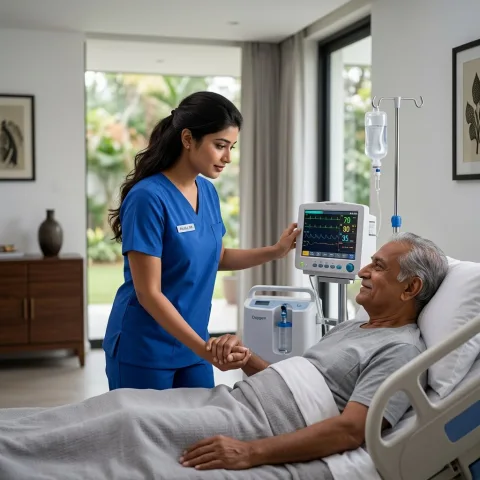
Medca Healthcare provides post-surgical nursing care at home in Bangalore including sterile wound dressing, drain management, suture line monitoring, DVT prophylaxis support, pain assessment, and mobilization guidance — by registered nurses following surgeon-specific recovery protocols. Confirm your Bangalore pincode during enquiry.
Near You
Post Surgical Nursing Care in Bannerghatta Road
Professional post surgical nursing care available in Bannerghatta Road (560076).
-
 Sub-service
Dressing Changes
Dressing Changes at home in Bangalore by a Medca nurse, as part of Post Surgical Nursing Care.
View sub-service → -
Sub-service
Medication Management
Medication Management at home in Bangalore by a Medca nurse, as part of Post Surgical Nursing Care.
View sub-service → -
Sub-service
Recovery Monitoring — Post Surgical Nursing Care
Recovery Monitoring at home in Bangalore by a Medca nurse, as part of Post Surgical Nursing Care.
View sub-service →
Medical overview
Medca Healthcare delivers clinical post-surgical nursing care at home in Bangalore for patients recovering from orthopaedic, abdominal, cardiac, neurosurgical, and oncological procedures. Surgical recovery at home requires sterile wound management, drain monitoring, DVT prophylaxis support, and early complication detection — tasks that demand registered nursing expertise.
Hospital stays are shortening globally, pushing complex post-operative care into home settings before patients are fully recovered. Medca post-surgical nurses implement surgeon-specific protocols for dressing changes, suture or staple line assessment, JP drain output monitoring, and mobilization guidance that prevents both deconditioning and surgical site compromise.
Post-surgical nursing is a specialist service within home nursing services. It pairs with wound care for complex wounds, injection services for anticoagulant prophylaxis, and post-hospitalization caregiver support as clinical needs decrease.
Symptoms & warning signs
- Post-operative surgical wound requiring regular sterile dressing changes
- Surgical drain in situ with output requiring measurement and documentation
- Post-operative pain limiting mobility and self-care capacity
- Swelling, warmth, or erythema around the surgical site
- Reduced mobility following joint replacement or abdominal surgery
- Anticoagulant injection requirement for DVT prophylaxis post-orthopaedic surgery
Common causes
- Elective orthopaedic surgery — hip replacement, knee replacement, spine surgery
- Abdominal surgery — laparoscopic or open cholecystectomy, hernia repair, colectomy
- Cardiac surgery — CABG, valve replacement with sternotomy wound care
- Oncological surgery with complex wound or stoma creation
- Emergency surgery — appendicectomy, trauma orthopaedic fixation
Risk factors
- Diabetes mellitus impairing wound healing and increasing SSI risk
- Obesity with increased surgical site tension and healing difficulty
- Smoking reducing tissue oxygenation and wound repair capacity
- Immunosuppression from chemotherapy or corticosteroid therapy
- Prolonged immobility post-surgery increasing DVT and deconditioning risk
Who needs this service
- Patients discharged home with surgical wounds requiring nurse-managed dressing
- Post-orthopaedic surgery patients on anticoagulant prophylaxis needing injection support
- Abdominal surgery patients with drains or complex wound closure
- Any post-operative patient where surgeon specifies home nursing care
- Patients stable at home without requirement for ICU-level monitoring
When higher-level clinical care is required
- Patients needing only personal hygiene and mobility help without wound care should use post-hospitalization caregiver services.
- Unstable post-operative patients with sepsis, anastomotic leak, or haemorrhage belong in hospital, not home nursing alone.
- Simple clean wounds with adhesive closure requiring no dressing change may not need nursing visits.
Why choose Medca Healthcare
Key benefits
- Sterile Wound Management
- Drain Output Monitoring
- GNM & B.Sc Nurses
- Bangalore Home Service
- DVT Prophylaxis Support
- Surgeon Protocol Compliance
Clinical care process
- 1 Obtain surgeon discharge protocol — dressing schedule, drain criteria, mobility restrictions.
- 2 Initial home visit wound and drain assessment with baseline photography if permitted.
- 3 Post-surgical nursing plan with visit schedule aligned to surgeon instructions.
- 4 Nurse assignment with surgical wound care experience for the specific procedure type.
- 5 Daily wound and drain logs with output trends and healing progression.
- 6 Surgeon communication at scheduled follow-up or when complications are detected.
Treatment support & care scope
Clinical & daily care support
- Sterile surgical wound dressing change per surgeon protocol
- Suture or staple line assessment for dehiscence, erythema, or discharge
- JP drain output measurement, character documentation, and removal coordination
- Subcutaneous anticoagulant injection for DVT prophylaxis when ordered
- Pain score assessment using validated scale with physician reporting
- Calf circumference and Homan's sign monitoring for DVT detection
- Progressive mobilization within surgeon's weight-bearing and activity restrictions
Related conditions
- Total hip and knee replacement post-operative nursing
- Spinal surgery wound care and mobilization restriction compliance
- CABG sternotomy wound monitoring and cardiac recovery nursing
- Abdominal surgery with multiple drain management
- Oncological mastectomy and axillary drain care
- Emergency trauma orthopaedic fixation recovery nursing
- Surgical Site Infection
- DVT Prophylaxis
- Joint Replacement Recovery
- Post-CABG Recovery
- Abdominal Surgery Recovery
Recovery guidance & expected outcomes
- Pre-follow-up visit wound documentation for surgeon review
- Family education on wound warning signs and activity restrictions
- Physiotherapy appointment coordination for prescribed post-op rehab
- Medication compliance support for analgesics and prophylactic antibiotics
- Transition planning to caregiver support as wound heals and mobility improves
Care team & availability
- Daily wound dressing visits during the first 1–2 post-operative weeks
- Twice-daily visits when drain output monitoring requires frequent assessment
- 24/7 nursing for complex multi-drain abdominal surgery recovery
- Tapering visit frequency as wound healing progresses toward caregiver transition
Emergency signs — seek immediate help
- Wound dehiscence — separation of suture line with visible tissue or evisceration
- Purulent wound discharge with fever suggesting surgical site infection
- Sudden calf swelling, pain, or warmth — possible DVT
- Chest pain or breathlessness post-orthopaedic or cardiac surgery — possible PE
- Drain output suddenly exceeding 200 mL in an hour or becoming frank blood
- Uncontrolled post-operative pain despite prescribed analgesics
Caregiver & family guidance
Do not change surgical dressings or remove drains — this is nursing-only territory. Enforce surgeon activity restrictions even when the patient feels better. Report any wound leakage, increased pain, calf swelling, or fever to the Medca nurse on the same day. Keep the surgical site dry unless nurse instructs otherwise.
Medical highlights
Medca Healthcare post-surgical home nursing in Bangalore delivers registered nurse wound dressing, surgical drain monitoring, complication detection, anticoagulant injection support, and recovery progression documentation for orthopaedic, abdominal, and cardiac surgery patients.
- Surgeon-protocol sterile wound dressing and suture line assessment.
- JP and surgical drain output monitoring with escalation criteria.
- DVT prophylaxis support — injection administration and calf monitoring.
- Pain assessment and physician communication for uncontrolled post-op pain.
- Progressive mobilization guidance protecting the surgical site.
Frequently asked questions
- How soon after surgery can home nursing begin?
- Often on the day of or day after hospital discharge. Medca coordinates with your surgeon's discharge plan.
- Do nurses follow our surgeon's specific protocol?
- Yes. We work from your surgeon's written discharge instructions, not generic protocols.
- How often are wound dressings changed at home?
- Frequency depends on the surgery — typically daily to every 48 hours for the first 1–2 weeks, per surgeon order.
- Can post-surgical nurses give anticoagulant injections?
- Yes. Enoxaparin and similar DVT prophylaxis injections are routinely administered by our nurses post-orthopaedic surgery.
- When can we switch from nursing to caregiver support?
- When the wound is healing well, drains are removed, and the patient needs daily living help rather than clinical wound management.
- What drain output level is concerning?
- Sudden increases, frank blood, or purulent content require immediate nurse assessment and surgeon notification.
- Is post-surgical nursing available for cardiac surgery?
- Yes. We manage sternotomy wound care, monitor for cardiac complications, and support cardiac recovery protocols.
- Does Medca provide nursing for cosmetic surgery recovery?
- We focus on medically necessary post-surgical recovery. Cosmetic procedures with simple wounds may need fewer visits — assessment determines need.
- How is post-surgical nursing different from post-hospitalization caregiver support?
- Post Surgical Nursing Care is clinical nursing (dressings, drains, pain/monitoring protocols). Post Hospitalization Care is caregiver ADL support after discharge. Families often need both when clinical and daily living help are required — Medca can combine or sequence them during assessment.
Medical information & trust
- Content author
- Medca Healthcare Clinical Content Team
- Medical reviewer
- Medca Healthcare
- Last reviewed
- August 7, 2026
- Last updated
- October 4, 2026
- Contact
- +91 8884 999 001 · SLN Complex, 2nd Floor, Arekere Gate, Bannerghatta Road, Bengaluru, Karnataka 560076
This page provides general medical information about home healthcare services and is not a substitute for emergency care or a direct medical consultation. Call emergency services (108/112) for life-threatening symptoms.