
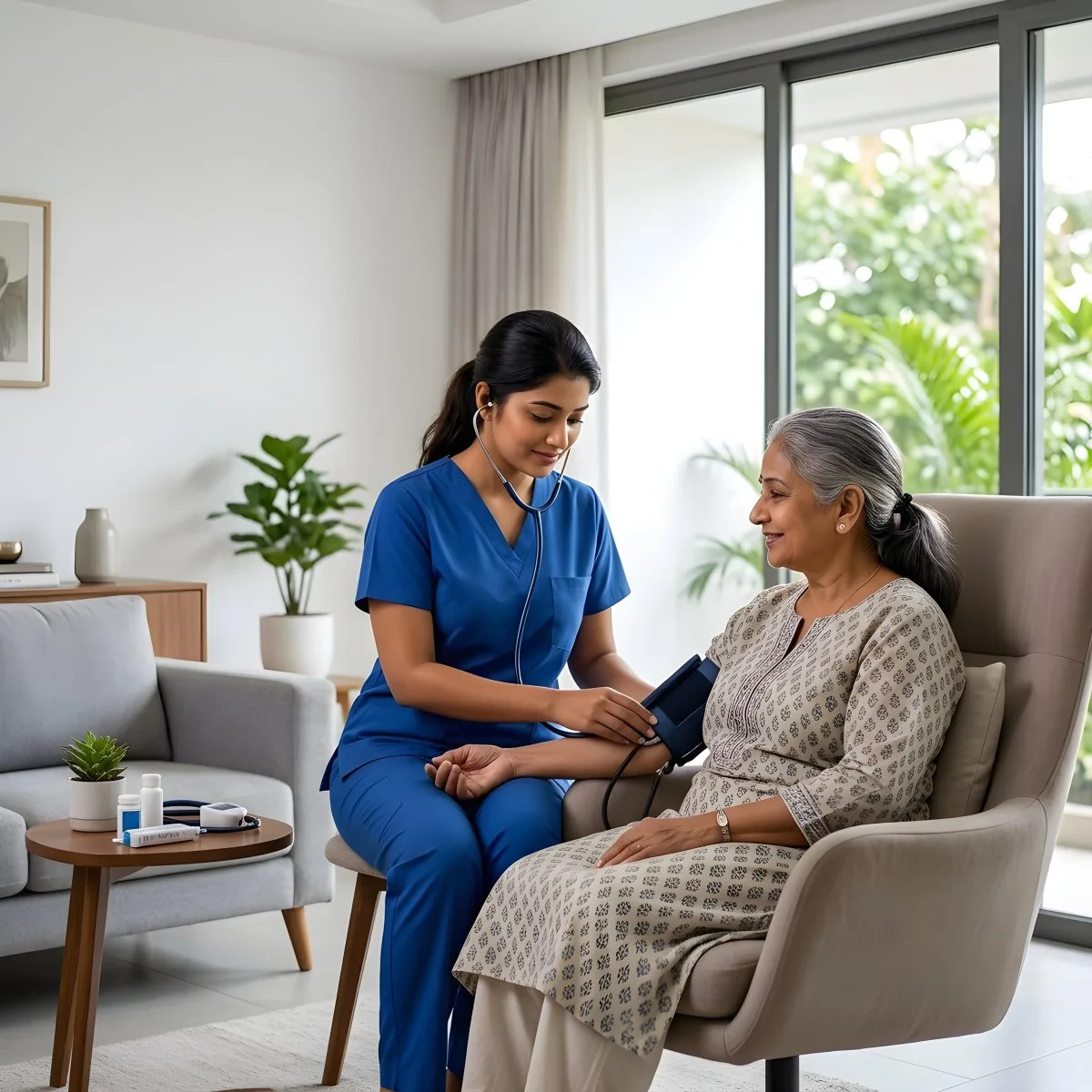
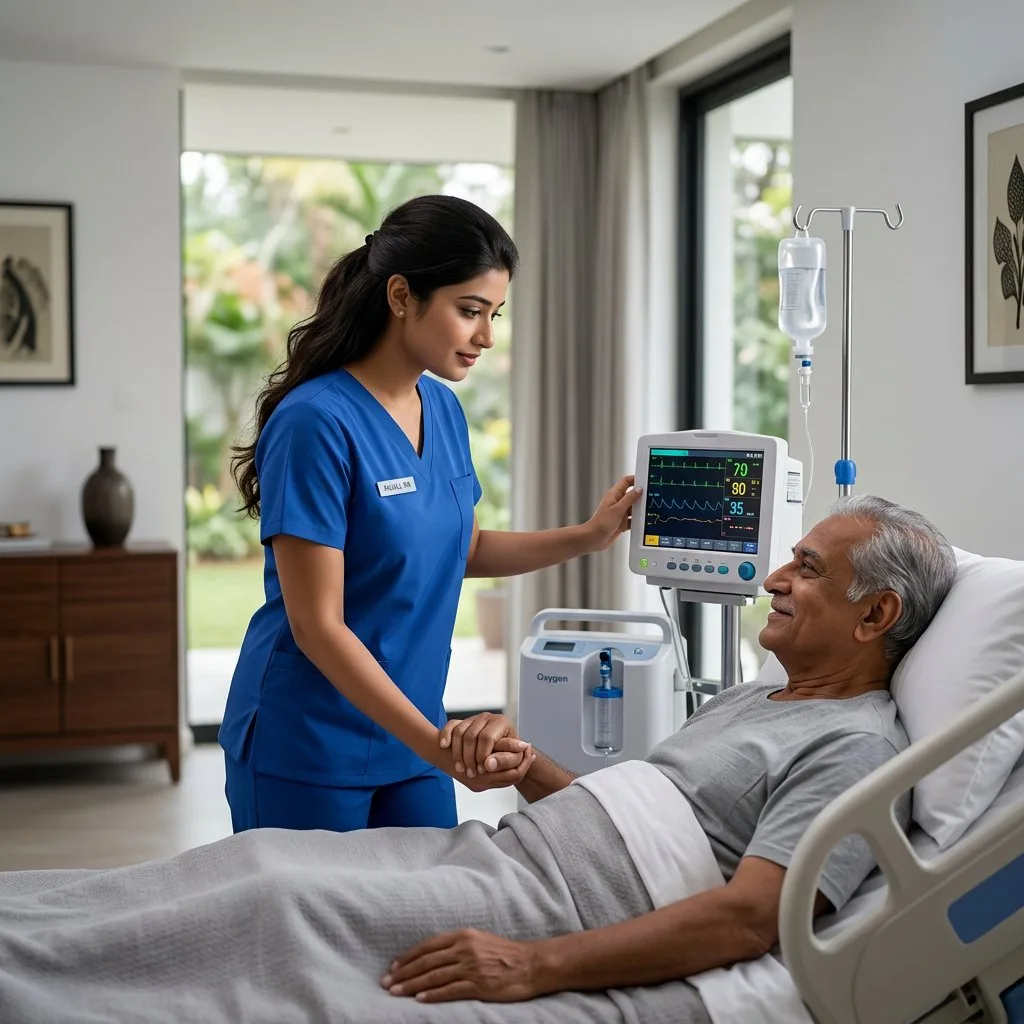

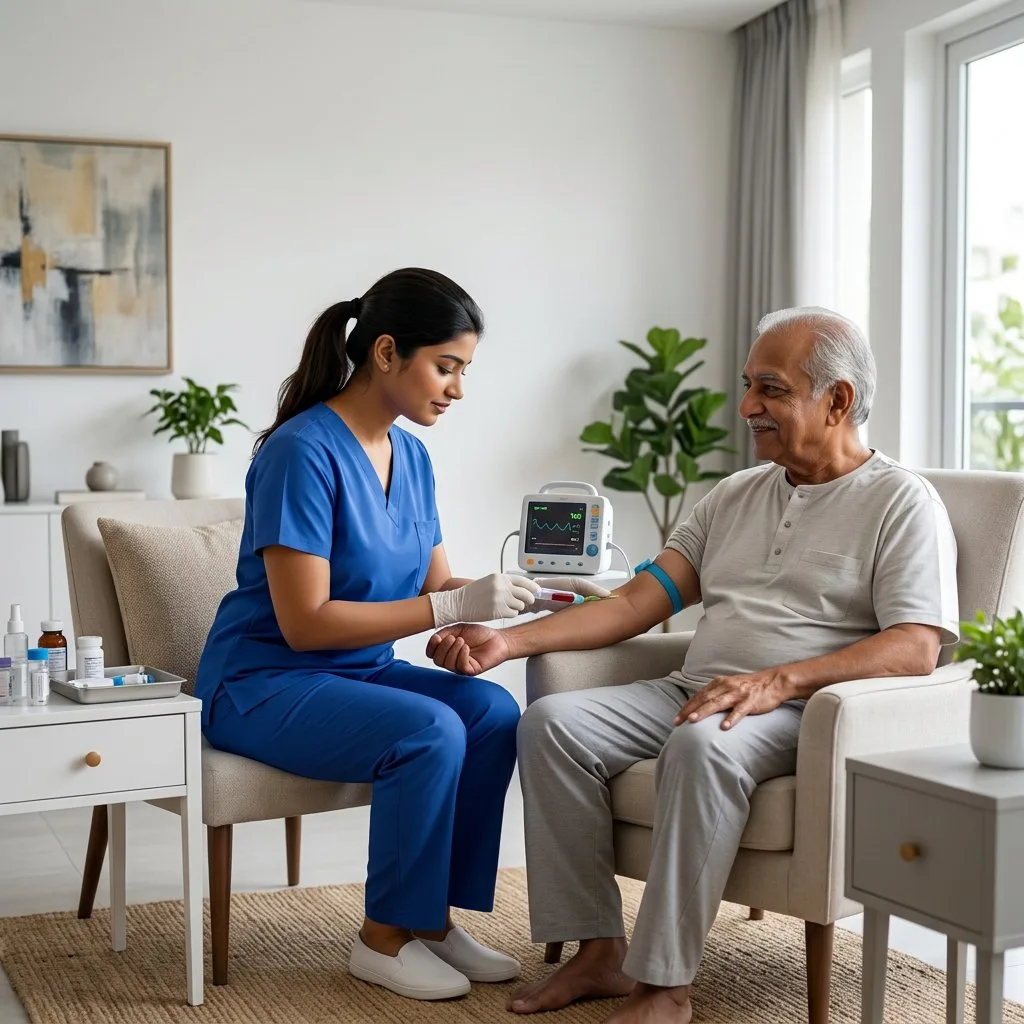
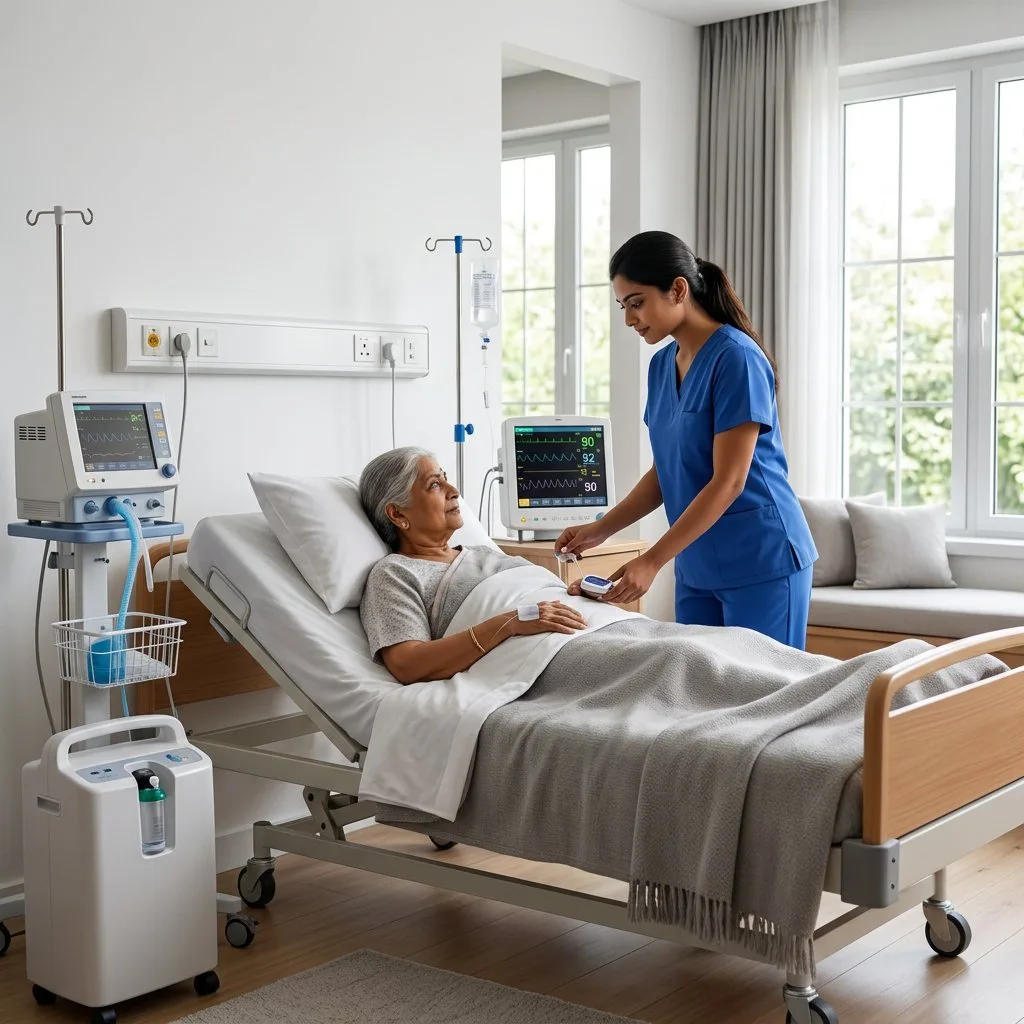
- 15+ years combined home healthcare experience
- Background-verified clinical staff
Medca Healthcare provides PEG tube care at home in Bangalore including stoma site hygiene, enteral formula administration, tube flushing, medication delivery, blockage management, and infection monitoring — by registered nurses trained in gastrostomy care protocols.
Medical overview
Medca Healthcare provides specialist PEG tube care at home in Bangalore for patients receiving long-term enteral nutrition through percutaneous endoscopic gastrostomy tubes. PEG feeding supports individuals with dysphagia from stroke, neurological disease, head and neck cancer, or critical illness who cannot safely consume adequate nutrition orally.
PEG tubes require meticulous stoma site care, correct feeding formula administration, flush protocols preventing blockage, and early detection of infection, granulation tissue, or tube displacement. Medca nurses manage the complete enteral feeding cycle — bolus and continuous pump feeds, medication administration through the tube, and stoma assessment at every visit.
PEG tube care is part of our home nursing services. Patients transitioning from Ryles tube feeding or needing combined wound care receive integrated nursing plans rather than fragmented single-procedure visits.
Symptoms & warning signs
- Dysphagia preventing safe oral intake after stroke or neurological disease
- Head and neck cancer treatment causing inability to swallow adequately
- Low body weight and malnutrition from inadequate oral nutrition
- PEG stoma site redness, discharge, or granulation tissue growth
- Feeding formula leakage around the stoma site
- Blocked PEG tube preventing formula administration
Common causes
- Stroke-related dysphagia with long-term enteral nutrition need
- Amyotrophic lateral sclerosis and progressive neuromuscular dysphagia
- Head and neck malignancy with surgical or radiation-related swallowing loss
- Severe traumatic brain injury with prolonged altered consciousness
- Paediatric-adjacent adult cerebral palsy with chronic feeding difficulty
Risk factors
- Poor stoma hygiene leading to peristomal infection
- Incorrect feeding position causing gastro-oesophageal reflux and aspiration
- Inadequate flush protocol causing tube occlusion
- Granulation tissue overgrowth around stoma site
- Accidental tube traction causing bumper migration or dislodgement
Who needs this service
- Patients with established PEG tube requiring home enteral feeding management
- Individuals discharged from hospital with new PEG needing home nursing setup
- Long-term PEG-dependent patients requiring scheduled nursing visits
- Stroke and neurological patients unable to meet nutritional needs orally
- Patients where physician and gastroenterologist have approved home PEG management
When higher-level clinical care is required
- Patients able to swallow safely with oral nutrition should pursue speech therapy and caregiver feeding support instead of PEG dependence.
- Acute PEG site infection with systemic sepsis requires hospital evaluation, not home management alone.
- Patients needing only meal preparation and oral feeding assistance should use caregiver services, not PEG nursing.
Why choose Medca Healthcare
Key benefits
- Enteral Feeding Expertise
- Stoma Site Management
- GNM & B.Sc Nurses
- Bangalore Home Service
- Blockage Prevention
- Nutrition Documentation
Clinical care process
- 1 Review PEG type, formula prescription, feeding schedule, and flush protocol.
- 2 Initial home assessment of feeding setup, pump equipment, and stoma condition.
- 3 Enteral feeding care plan with dietitian-aligned nutrition targets.
- 4 Nurse assignment with gastrostomy care training and experience.
- 5 Daily intake, tolerance, and stoma documentation.
- 6 Gastroenterology coordination for tube replacement or complication management.
Treatment support & care scope
Clinical & daily care support
- Stoma site cleaning and dressing with rotation of fixation devices
- Enteral formula preparation and administration — bolus or pump feeds
- Pre and post-feed flushing with sterile water per protocol
- Medication crushing and liquid administration through PEG tube
- Residual volume checking when ordered by physician or dietitian
- Stoma assessment for infection, granulation, and bumper position
- Feeding position management — 30–45 degree head elevation during and after feeds
Related conditions
- Post-stroke PEG placement with concurrent rehabilitation nursing
- ALS progressive dysphagia with long-term enteral nutrition
- Head and neck cancer PEG during and after oncological treatment
- Elderly failure-to-thrive with physician-ordered PEG nutrition
- Transition from Ryles nasogastric tube to permanent PEG
- Combined PEG care with tracheostomy management in ventilated patients
- Dysphagia
- Enteral Nutrition
- Stroke
- ALS
- Head and Neck Cancer
Recovery guidance & expected outcomes
- Family education on emergency tube dislodgement management
- Formula inventory tracking and reorder coordination
- Weight monitoring and nutritional status reporting
- Coordination with speech therapy for swallow reassessment when indicated
- Pump equipment maintenance and alarm response training for family
Care team & availability
- Scheduled feeding visits for bolus feed regimens — 4–6 times daily
- Continuous pump feed management with extended nursing shifts
- Daily stoma care visits combined with feeding administration
- 24/7 nursing when PEG combines with ICU-at-home or tracheostomy care
Emergency signs — seek immediate help
- Complete PEG tube dislodgement — stoma tract closes within hours
- Signs of aspiration — coughing, fever, respiratory distress during or after feeding
- Stoma site necrosis, abscess, or peritonitis symptoms — rigid abdomen, severe pain
- Persistent tube blockage unresponsive to flush protocol
- Severe gastro-oesophageal reflux with vomiting during feeds
- Significant formula intolerance — diarrhoea, distension, high residual volumes
Caregiver & family guidance
Never feed through a PEG tube unless specifically trained and authorized by the Medca nurse. Maintain head elevation 30–45 degrees during and 30 minutes after every feed. Report stoma redness, leakage, or formula intolerance immediately. If the PEG tube dislodges, cover the stoma with sterile gauze and call the nurse — do not attempt reinsertion.
Medical highlights
Medca Healthcare PEG tube home nursing in Bangalore covers gastrostomy site care, bolus and pump enteral feeding, tube patency maintenance, stoma infection monitoring, and nutrition documentation by registered nurses for dysphagia and neurological patients.
- Registered nurses for all PEG feeding and stoma care procedures.
- Enteral formula administration via bolus or pump-controlled feeds.
- Stoma site infection and granulation tissue monitoring.
- Tube patency maintenance with structured flush protocols.
- Medication administration through PEG tube per physician order.
Sub-services
-
Monitoring
Medca Healthcare delivers premium Monitoring solutions, combining clinical expertise with personalized patient care in the comfort of your o...
-
PEG Feeding Support
Medca Healthcare delivers premium PEG Feeding Support solutions, combining clinical expertise with personalized patient care in the comfort...
-
Tube Care
Medca Healthcare delivers premium Tube Care solutions, combining clinical expertise with personalized patient care in the comfort of your ow...
Frequently asked questions
- Who manages PEG feeding at home?
- Registered nurses trained in enteral nutrition and gastrostomy care. Caregivers may assist with positioning under nurse direction but do not administer feeds independently without training.
- How often do PEG nursing visits occur?
- Typically 4–6 times daily for bolus feeds, or continuous pump management with extended nursing shifts for complex cases.
- What happens if the PEG tube falls out?
- Cover the stoma immediately and contact Medca. The tract begins closing within hours — urgent gastroenterology or nurse replacement is needed.
- Can medications be given through the PEG tube?
- Yes, when crushed or in liquid form as approved by the physician. Nurses administer and document all tube medications.
- How is PEG site infection prevented?
- Daily stoma cleaning, dry secure dressing, rotation of external fixation, and early reporting of redness or discharge.
- Is PEG care different from Ryles tube care?
- Yes. PEG is a direct gastric stoma requiring different site care, while Ryles tubes are nasogastric with nare and throat considerations.
- Can PEG patients ever return to oral eating?
- Some can with speech therapy progress. Nurses coordinate swallow reassessment when physicians order oral trial periods.
- Does Medca provide the feeding formula and pump?
- Nurses administer formula prescribed by the dietitian. Formula and pump equipment are typically sourced through pharmacy and equipment partners.
Medical information & trust
- Content author
- Medca Healthcare Clinical Content Team
- Medical reviewer
- Medca Healthcare
- Last reviewed
- August 7, 2026
- Last updated
- September 1, 2026
- Contact
- +91 8884 999 001 · SLN Complex, 2nd Floor, Arekere Gate, Bannerghatta Road, Bengaluru, Karnataka 560076
This page provides general medical information about home healthcare services and is not a substitute for emergency care or a direct medical consultation. Call emergency services (108/112) for life-threatening symptoms.