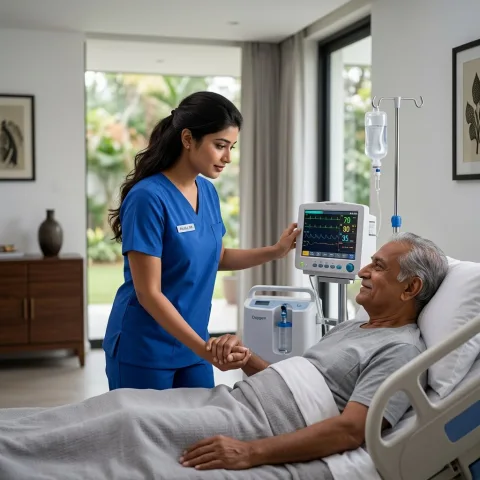
- 5+ years of home healthcare experience
- Background-verified clinical staff
Medca Healthcare provides post-hospitalization care at home in Bangalore helping patients transition safely from hospital to home. Caregivers assist with discharge compliance, mobility, hygiene, medication reminders, nutrition, and recovery monitoring — with flexible short-term contracts aligned to recovery timelines. Confirm your Bangalore pincode during enquiry.
Near You
Post Hospitalization Care in Bannerghatta Road
Professional post hospitalization care available in Bannerghatta Road (560076).
-
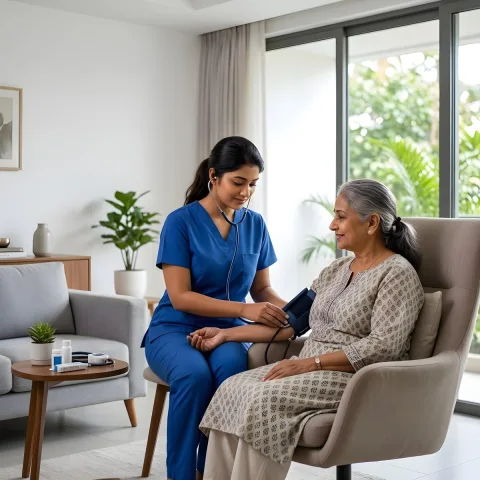 Sub-service
Daily Living Support — Post Hospitalization Care
Daily Living Support at home in Bangalore, provided by a Medca caregiver as part of Post Hospitalization Care.
View sub-service → -
Sub-service
Follow-Up Care Assistance
Follow-Up Care Assistance at home in Bangalore, provided by a Medca caregiver as part of Post Hospitalization Care.
View sub-service → -
Sub-service
Medication Reminder Support — Post Hospitalization Care
Medication Reminder Support at home in Bangalore, provided by a Medca caregiver as part of Post Hospitalization Care.
View sub-service → -
Sub-service
Mobility Support — Post Hospitalization Care
Mobility Support at home in Bangalore, provided by a Medca caregiver as part of Post Hospitalization Care.
View sub-service → -
Sub-service
Recovery Support — Post Hospitalization Care
Recovery Support at home in Bangalore, provided by a Medca caregiver as part of Post Hospitalization Care.
View sub-service →
Medical overview
Medca Healthcare provides structured post-hospitalization care at home in Bangalore bridging the critical gap between hospital discharge and full recovery. The first weeks at home carry the highest readmission risk — patients are weak, medications change, and families often lack clinical confidence to manage new care routines independently.
Our caregivers implement discharge instructions precisely: wound observation (non-clinical), medication reminders, dietary compliance, progressive mobility, and vital trend monitoring. Early detection of fever, wound redness, or declining function triggers nursing escalation before a manageable complication becomes an emergency readmission.
Post-hospitalization support sits within caregiver services. Surgical patients needing sterile dressing should add post-surgical nursing, while medical discharges may need home nursing for IV antibiotics or complex monitoring.
Symptoms & warning signs
- Post-discharge weakness limiting self-care and household mobility
- Fatigue and reduced stamina after prolonged hospital admission
- Confusion about new medication schedules and dietary restrictions
- Pain limiting movement and participation in prescribed exercises
- Anxiety about managing recovery without professional guidance
- Temporary dependence on others for bathing, dressing, and toileting
Common causes
- Medical admissions — pneumonia, UTI, heart failure exacerbation, sepsis recovery
- Surgical procedures — orthopaedic, abdominal, cardiac, or neurosurgical
- Emergency department visits followed by brief observation discharge
- ICU stays causing post-intensive care syndrome and deconditioning
- Elective procedures requiring defined home recovery periods
Risk factors
- Living alone without family support during recovery window
- Age over 75 with multiple comorbidities and polypharmacy
- Previous hospital readmission within 30 days for same condition
- Inadequate understanding of discharge instructions
- Absence of follow-up appointment within recommended timeframe
Who needs this service
- Patients recently discharged from hospital needing daily living support at home
- Individuals with temporary mobility limitations during recovery phase
- Families unable to provide full-time care during the critical first weeks
- Patients stable at home without active IV or sterile wound care needs
- Short-term recovery support for defined periods — typically 2–8 weeks
When higher-level clinical care is required
- Post-surgical patients with open wounds requiring sterile dressing need post-surgical nursing, not caregiver-only support.
- Discharges requiring home IV antibiotics, oxygen titration, or drain management need registered nurses.
- Patients still clinically unstable at discharge should remain hospitalized until safe for home care.
Why choose Medca Healthcare
Key benefits
- Discharge Compliance
- Rapid Home Deployment
- Recovery Monitoring
- Bangalore-Wide Coverage
- Fall Prevention
- Short-Term Flexibility
Clinical care process
- 1 Pre-discharge or immediate post-discharge consultation with family and hospital notes.
- 2 Home readiness assessment — bed location, bathroom access, medication organization.
- 3 Recovery care plan with daily goals, restrictions, and escalation triggers.
- 4 Caregiver deployment ideally before or on the day of hospital arrival home.
- 5 Daily recovery logs tracking mobility, intake, vitals, and wound appearance.
- 6 Graduated discharge from caregiver support as independence returns.
Treatment support & care scope
Clinical & daily care support
- Discharge instruction review and daily compliance tracking
- Medication reminders for new prescriptions and discontinued drug avoidance
- Progressive ambulation support following surgeon or physician guidelines
- Personal hygiene assistance during initial weakness phase
- Temperature and general wellness observation with trend reporting
- Feeding assistance aligned with the recovery nutrition plan (meals provided by family)
- Follow-up appointment escort and transport coordination
Related conditions
- Post-pneumonia and respiratory infection recovery
- Post-orthopaedic surgery — hip, knee replacement mobility support
- Post-cardiac event recovery with activity restriction compliance
- Post-abdominal surgery convalescence and dietary progression
- Post-ICU deconditioning and functional rebuilding
- Post-stroke medical stabilization before dedicated stroke rehabilitation care
- Post-Surgical Recovery
- Hospital Readmission Prevention
- Post-ICU Syndrome
- Deconditioning
- Discharge Transition
Recovery guidance & expected outcomes
- Encouragement of prescribed walking distances and rest intervals
- Preparation of recovery-appropriate meals and hydration schedules
- Encouragement to rest while families handle household responsibilities
- Companionship reducing post-hospital anxiety and disorientation
- Coordination with physiotherapy visits when ordered
Care team & availability
- 24/7 coverage for frail post-ICU patients needing overnight assistance
- Short-term 2-week intensive support post-discharge
- Extended daily support during the highest-risk first week at home
- Tapering schedules reducing hours as recovery progresses
Emergency signs — seek immediate help
- Fever above 38°C — possible surgical site or respiratory infection
- Wound redness, warmth, drainage, or dehiscence
- Sudden breathlessness, chest pain, or oxygen desaturation
- Calf swelling or pain suggesting deep vein thrombosis post-surgery
- Confusion, inability to urinate, or severe uncontrolled pain
- Fall with suspected fracture or head injury
Caregiver & family guidance
Keep discharge paperwork accessible and follow activity restrictions exactly — even if the patient feels better prematurely. Track all medications in a chart. Do not skip follow-up appointments. Report any wound change, fever, or functional decline to the Medca supervisor on the same day.
Medical highlights
Medca Healthcare post-hospitalization home care in Bangalore supports safe discharge transitions with daily living assistance, medication adherence, mobility progression, vital observation, and early complication detection under nursing supervision.
- Rapid deployment coordinated with hospital discharge schedules.
- Strict adherence to discharge medication and diet instructions.
- Progressive mobility support preventing deconditioning and falls.
- Early warning detection reducing preventable readmissions.
- Flexible short-term contracts matching estimated recovery duration.
Frequently asked questions
- How soon after discharge can a caregiver start?
- Ideally before the patient arrives home. Medca coordinates rapid deployment, often same-day or next-day in Bangalore.
- Is post-hospitalization care short-term only?
- Typically yes — 2 to 8 weeks depending on recovery. Contracts flex as the patient regains independence.
- Do I need a caregiver or a nurse after surgery?
- Caregivers handle daily living and recovery support. Nurses are needed for wound dressing, drains, IV medications, and clinical monitoring.
- Can caregivers help with post-surgical wound checking?
- Caregivers observe and report wound appearance but do not perform sterile dressing changes — that requires a nurse.
- What reduces hospital readmission risk at home?
- Medication compliance, early mobilization, infection monitoring, follow-up attendance, and adequate nutrition — all supported by our caregivers.
- Do you coordinate with the discharging hospital?
- Yes. Families can share discharge summaries and we align care plans with physician instructions.
- Can one caregiver cover the full recovery period?
- Continuity is preferred. Shift length can taper as the patient improves.
- What if recovery takes longer than expected?
- Care plans extend easily. Nursing support can be added if clinical complexity increases during recovery.
- Can post-operative patients receive caregiver support at home?
- Yes when the need is daily living and recovery support after discharge. Caregivers assist with mobility, hygiene, medication reminders, and monitoring. If sterile wound care, drains, or clinical nursing procedures are required, also see Post Surgical Nursing Care under Home Nursing Services.
- How is post-hospitalization care different from post-surgical nursing?
- Post Hospitalization Care is a caregiver service for ADL and recovery transition. Post Surgical Nursing Care is a clinical nursing service for wound, drain, and medical monitoring. Families often need both sequenced or combined — Medca guides the right mix during assessment.
Medical information & trust
- Content author
- Medca Healthcare Clinical Content Team
- Medical reviewer
- Medca Healthcare
- Last reviewed
- August 7, 2026
- Last updated
- October 4, 2026
- Contact
- +91 8884 999 001 · SLN Complex, 2nd Floor, Arekere Gate, Bannerghatta Road, Bengaluru, Karnataka 560076
This page provides general medical information about home healthcare services and is not a substitute for emergency care or a direct medical consultation. Call emergency services (108/112) for life-threatening symptoms.