
- 5+ years of home healthcare experience
- Background-verified clinical staff
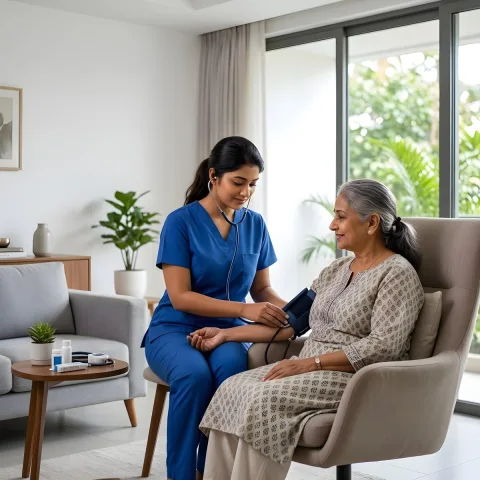
Medca Healthcare provides disability care at home in Bangalore with personalized support for physical and cognitive disabilities — including mobility assistance, adaptive personal care, meal support, companionship, and supervised exercise routines — matched to each individual's functional abilities and goals. Confirm your Bangalore pincode during enquiry.
Near You
Disability Care in Bannerghatta Road
Professional disability care available in Bannerghatta Road (560076).
-
 Sub-service
Community Participation Support
Community Participation Support at home in Bangalore, provided by a Medca caregiver as part of Disability Care.
View sub-service → -
Sub-service
Daily Living Support — Disability Care
Daily Living Support at home in Bangalore, provided by a Medca caregiver as part of Disability Care.
View sub-service → -
Sub-service
Mobility Support — Disability Care
Mobility Support at home in Bangalore, provided by a Medca caregiver as part of Disability Care.
View sub-service → -
Sub-service
Personal Assistance
Personal Assistance at home in Bangalore, provided by a Medca caregiver as part of Disability Care.
View sub-service →
Medical overview
Medca Healthcare delivers respectful disability care at home in Bangalore for adults and seniors with physical, intellectual, or cognitive disabilities affecting daily independence. Whether the challenge stems from cerebral palsy, spinal cord injury, amputation, intellectual disability, or acquired brain injury, our caregivers provide customized support that maximizes autonomy while ensuring safety.
Disability is not one condition — each individual has unique functional abilities, communication methods, and personal goals. Medca avoids one-size-fits-all placements by matching caregivers to specific disability profiles and training them in adaptive techniques for transfers, feeding, communication boards, and prescribed exercise routines. The aim is participation in daily life, not passive dependency.
Disability support is part of our caregiver services category. Patients needing clinical procedures should consider home nursing or wound care when medical complexity increases.
Symptoms & warning signs
- Difficulty with independent bathing, dressing, or toileting due to physical limitation
- Wheelchair dependence or requirement for mobility aids indoors
- Communication barriers requiring alternative methods or patience
- Fatigue limiting participation in work, education, or social activities
- Risk of falls or injury during unsupervised transfer attempts
- Social isolation from inability to leave home without assistance
Common causes
- Congenital conditions — cerebral palsy, spina bifida, genetic syndromes
- Acquired spinal cord injury from trauma or surgery
- Stroke or traumatic brain injury causing lasting functional impairment
- Amputation or severe orthopaedic conditions limiting mobility
- Intellectual or developmental disabilities requiring lifelong support
Risk factors
- Living alone without family or community support network
- Inadequate home modifications — stairs, narrow doorways, inaccessible bathrooms
- Untrained informal caregivers causing injury during transfers
- Secondary complications — pressure ulcers, contractures, depression
- Medication non-adherence when cognitive disability affects self-management
Who needs this service
- Adults and seniors with physical or cognitive disabilities needing daily living support
- Individuals whose families require professional backup for safe transfers and hygiene
- Disability pensioners or working-age adults needing daytime attendant coverage
- Patients stable at home without active clinical nursing procedure requirements
- Families transitioning from institutional care to community-based home support
When higher-level clinical care is required
- Patients with open pressure ulcers, tracheostomy, or ventilator dependence need specialized nursing care.
- Individuals requiring IV medications or sterile catheter care need registered home nurses.
- Acute post-surgical recovery with unstable wounds belongs under post-surgical nursing, not general disability attendant care alone.
Why choose Medca Healthcare
Key benefits
- Adaptive Daily Living Support
- Flexible Shift Scheduling
- Mobility & Transfer Safety
- Bangalore-Wide Service
- Rehab Exercise Assistance
- Companionship & Social Support
Clinical care process
- 1 Comprehensive intake covering disability type, functional level, communication style, and goals.
- 2 Home accessibility assessment for transfers, bathroom use, and equipment needs.
- 3 Collaborative care plan involving family, patient, and any existing therapists.
- 4 Caregiver matching with disability-relevant experience and temperament fit.
- 5 Regular functional reviews adjusting support level as abilities change.
- 6 Coordination with physiotherapists and occupational therapists when in the care team.
Treatment support & care scope
Clinical & daily care support
- Safe wheelchair transfers and use of slide boards or hoists when available
- Adaptive dressing and grooming respecting patient preference and pace
- Feeding assistance with adaptive utensils (meals provided by family)
- Toileting support including catheter bag monitoring for non-clinical observation
- Supervision of prescribed range-of-motion and strengthening exercises
- Community escort for medical appointments or social outings when requested
- Environmental organization to keep mobility paths clear and safe
Related conditions
- Spinal cord injury with paraplegia or quadriplegia
- Cerebral palsy in adults requiring ongoing daily support
- Post-amputation rehabilitation and prosthetic adaptation assistance
- Intellectual disability with community participation goals
- Acquired brain injury with cognitive and physical dual challenges
- Muscular dystrophy and progressive neuromuscular conditions
- Spinal Cord Injury
- Cerebral Palsy
- Acquired Brain Injury
- Amputation Recovery
- Muscular Dystrophy
Recovery guidance & expected outcomes
- Supported participation in hobbies, reading, or screen-based entertainment
- Accompanied outdoor time within safe community boundaries
- Assistance with work-from-home or educational routines where applicable
- Feeding assistance aligned with dietary and swallowing needs (meals provided by family)
- Encouragement of self-care tasks performed independently where safe
Care team & availability
- 24/7 live-in care for individuals requiring overnight assistance
- Daytime shifts for working families needing coverage during office hours
- Long-term live-in arrangements for ongoing daily living support
- Weekend-only blocks supplementing weekday family caregiving
Emergency signs — seek immediate help
- Fall with suspected fracture, head injury, or inability to weight-bear
- Autonomic dysreflexia symptoms in spinal cord patients — severe headache, flushing, hypertension
- Sudden loss of bowel or bladder function suggesting cauda equina syndrome
- Pressure ulcer with exposed bone, purulent drainage, or surrounding cellulitis
- Chest pain, breathing difficulty, or aspiration during meals
- Seizure activity beyond the patient's usual pattern
Caregiver & family guidance
Always ask before assisting — many individuals with disabilities prefer to attempt tasks independently first. Learn the patient's communication method, whether speech, gestures, or assistive devices. Keep wheelchair brakes locked during transfers. Report any new pain, skin changes, or functional decline to the Medca supervisor promptly.
Medical highlights
Medca Healthcare disability home care in Bangalore offers tailored attendant support for physical, intellectual, and acquired disabilities. Caregivers assist with transfers, hygiene, feeding, community access, and rehabilitation exercises while promoting maximum independence within safe limits.
- Individualized matching — not generic helper placements for diverse disability types.
- Mobility and transfer support using adaptive equipment and safe techniques.
- Encouragement of independence in dressing, feeding, and daily tasks where possible.
- Supervised assistance with prescribed physiotherapy and occupational exercises.
- Respectful, dignity-focused communication adapted to each person's abilities.
Frequently asked questions
- Does Medca support both physical and intellectual disabilities?
- Yes. We match caregivers to physical disabilities, intellectual disabilities, and combined presentations based on individual assessment.
- Can caregivers assist with physiotherapy exercises?
- Yes. Caregivers supervise and assist with exercises prescribed by your physiotherapist but do not design clinical rehabilitation programs independently.
- Is disability care available for working-age adults?
- Yes. We provide daytime and full-day support for working-age adults, not only elderly patients.
- Do you help with wheelchair-accessible transport to appointments?
- Caregivers can accompany patients in accessible transport arranged by the family. Medca coordinates timing and escort support.
- What equipment should we have at home?
- This depends on the disability — wheelchairs, grab bars, shower chairs, and hoists may be recommended during our home assessment.
- When does a disability patient need a nurse?
- When clinical needs arise — wound care, catheter insertion, IV therapy, or tracheostomy management — registered nursing is required.
- Can the same caregiver stay long-term for continuity?
- Yes. We prioritize caregiver continuity when the match works well for the patient and family.
- How is the care plan updated as abilities improve?
- Supervisors review functional progress regularly and reduce support levels when rehabilitation goals are met, promoting independence.
- Is caregiver support enough for disability care?
- Disability Care focuses on daily living and independence support. When clinical procedures are required, Medca may recommend Home Nursing Services in addition.
Medical information & trust
- Content author
- Medca Healthcare Clinical Content Team
- Medical reviewer
- Medca Healthcare
- Last reviewed
- August 7, 2026
- Last updated
- October 4, 2026
- Contact
- +91 8884 999 001 · SLN Complex, 2nd Floor, Arekere Gate, Bannerghatta Road, Bengaluru, Karnataka 560076
This page provides general medical information about home healthcare services and is not a substitute for emergency care or a direct medical consultation. Call emergency services (108/112) for life-threatening symptoms.